
The Stanislavski Method – The Actor’s ABC
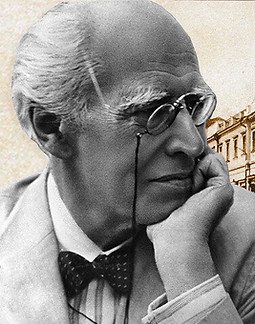
Antonella Cornici[1]
The Stanislavski Method – The Actor’s ABC
The Stanislavski Method stands at the foundation of many theatre schools around the world, including those in Romania, strongly shaping the way actors build their characters and approach performance. Drawing on this system, actors work with imaginary scenarios and situations to enter the logic and inner structure of their characters. This process allows them to explore, with greater authenticity and nuance, the motivations, emotions, and reactions their characters require.
In my pedagogical and directorial practice, I continue to use a number of these exercises, both in working with master’s students and in collaborations with professional actors.
As a director, I have also adopted the technique of fragmenting the text into distinct episodes, each with its own clearly defined situation. This strategy helps organize the dramatic material and structure the entire performance. I recommend this approach to my directing students as well, along with several exercises valuable for their work with actors, as it helps them organize their ideas and clarify their creative direction.
It is important to emphasize that although the Stanislavski Method is often associated strictly with realism, its essence lies in the pursuit of scenic truth — a truth that can take multiple forms beyond any specific aesthetic label.
Keywords: Stanislavski, theatre, actor, realism
From the outset, it must be clarified that the frequent association of the Stanislavski method exclusively with realism is reductive. The central aim of his approach was not realism as a style, but scenic truth. Yuri Kordonsky articulates this distinction clearly in the preface to An Actor’s Work on Himself, translated by Raluca Rădulescu: Stanislavski did not seek realism, but fidelity to truth, regardless of the theatrical genre. The scene between Hamlet and his father’s ghost, for example, is not realistic in a mimetic sense, yet it is built upon clear circumstances, objectives, obstacles, tactics, units of action, rhythm, and atmosphere — this is where we encounter the Stanislavski method.
“Let us not confuse truth with realism. Unfortunately, the Stanislavski method is too often perceived as a method of realism, whereas it is, in fact, a method of performing ‘realistically’ or, in other words, truthfully, in any theatrical genre. Stanislavski did not seek realism, but truth. Is the scene between Hamlet and his father’s ghost realistic? No. Do the characters in this scene receive given circumstances and certain objectives? Do they overcome obstacles? Do they search for better tactics and redirect their attention? Is the scene divided into several units, each with its own rhythm and atmosphere? Yes. And this is where Stanislavski enters.”[2]
One exercise that remains relevant today in the art of acting is affective memory. Although controversial and often criticized for its emotionally demanding potential, the exercise retains genuine value in the exploration and authentic expression of emotions on stage.
Affective memory, or the memory of feelings[3] is conceived as a tool of inner investigation. Its premise is apparently simple: emotions once experienced do not disappear, but can be reactivated through the reconstruction of the conditions that generated them. It is not the emotion itself that is summoned directly, but the concrete sensory context — the light, the temperature, the smell, the posture of the body, the rhythm of breathing. Emotion thus emerges as a secondary effect, not as the result of an act of will.
The distortion appeared in practice, when the exercise was reduced to a brutal exploitation of personal biography. Konstantin Stanislavski himself observed that such an approach leads either to hysteria, blockage, or to a form of private realism inaccessible to the spectator. In this context, the criticisms concerning psychological risk and emotional narcissism are entirely justified.
After the 1920s, Konstantin Stanislavski gradually distanced himself from this method. The emphasis shifted toward physical action. Emotion was no longer the starting point, but the result of a justified stage action. Affective memory did not disappear, but became a secondary tool, a reservoir of nuances rather than the principal engine of creation. Stanislavski emphasized that the actor should not relive a personal emotion, but rather create the conditions in which the character’s emotion becomes inevitable.
An essential distinction, often overlooked, is the one between affective memory and raw emotional memory. Stanislavski preferred the former precisely because it presupposes distance and control. The actor remains an active observer of his or her own emotion, rather than its prisoner. Without this double awareness, the exercise becomes dangerous. In his pedagogy, affective memory was used fragmentarily, through simple and neutral emotions — calm joy, melancholy, anticipation — not through major traumas. The aim was the cultivation of sensitivity and inner attention, not the exposure of suffering. Stanislavski warned that violent emotions are the most difficult to reproduce and the least useful on stage.
The real issue is not whether affective memory is “good” or “bad,” but whether the actor remains sovereign over his or her inner material or is consumed by it. It is here that the boundary between a pedagogical exercise and an initiatory experience is drawn. In his maturity, Stanislavski clearly chose the former.
The Stanislavski method remains a major reference point in actor training internationally, even within a profoundly transformed theatrical context. Its principles continue to be cultivated in prestigious institutions such as the Lee Strasberg Theatre and Film Institute, the Actors Studio, and the National Institute of Dramatic Art in Australia. The method is not a recipe, but a way of thinking about the actor’s work.
Today, the Stanislavski system no longer functions as an instruction manual, but rather as an ABC for actors at the beginning of their training. Theatre, the actor, and even the very idea of the subject have changed, yet the conception of theatre as a laboratory and of the actor as a researcher of his or her own presence remains strikingly relevant.
Its contemporary relevance can be identified in three major directions: the idea that emotion cannot be commanded but emerges as an effect; the organic relationship between inner and outer life, between the psychological and the physical; and the ethics of acting work, which impose limits and responsibility. In an era in which vulnerability is often exposed indiscriminately, such caution appears surprisingly modern. Problems arise when the system is frozen into a rigid canon and transformed into a technology of conformism: standardized psychological realism, the “correct” emotion, obligatory subtext. This is not Stanislavski’s legacy, but that of his epigones.
In practice, the system functions today as a basic grammar. Actors who know it are able to move beyond it consciously; those who ignore it often end up reinventing the same principles under different names. Perhaps the most contemporary aspect of Konstantin Stanislavski is his distrust of his own system. He constantly revised it, questioned it, and partially abandoned it. His relevance today lies not in the method itself, but in his refusal of dogma.
In the current context, marked by the massive presence of technology in the performing arts, I believe Stanislavski’s principles become all the more valuable. Precisely in an era dominated by visual effects, digital mediation, and the acceleration of perception, the actor’s ability to construct scenic truth remains an irreducible core of theatrical art. Technology may amplify, enhance, or even distort a performance, but it cannot substitute the actor’s living, responsible, and conscious presence.
From this perspective, I do not see the Stanislavski method as a set of fixed rules, but as a framework of thought that can be adapted to any aesthetic and any directorial vision. For me, its relevance lies in the fact that it offers the actor tools of inner orientation rather than recipes for performance. Regardless of style, form, or convention, the actor is always confronted with the same essential questions: Who am I? Where am I? Why do I act? When does the action take place? These questions do not limit artistic freedom; they make it possible.
In my own pedagogical and artistic practice, affective memory is not an end in itself, but an instrument for refining sensitivity. In my work with actors, I never begin by directly demanding the recall of an intense personal memory. For example, in exploring a state such as loss or longing, I do not ask the actor to evoke a biographical trauma, but rather to reconstruct a simple sensory situation: a concrete space, a temperature, a recurring sound, a precise and repetitive physical action. Emotion, when it appears, is the result of this framework, not the objective of the exercise.
Another type of work I frequently employ is the integration of affective memory within a clear action. The actor is given a precise task — to obtain something, to avoid something, to convince, to delay — while personal memory functions only as a source of nuance, not as the driving force. For instance, in a conflict scene, the emphasis falls on tactics and on the relationship with the partner, not on emotional intensity. If the actor recognizes a personal resonance, it is used for the precision of the relationship rather than for the amplification of feeling. The actor must be able to enter and leave the exercise without emotional residue. What interests me is that the actor learns the control of attention and availability, not self-abandonment. Emotion is valuable only insofar as it can be revisited, shaped, and transmitted scenically.
I believe that Konstantin Stanislavski’s true legacy is not psychological realism, but the ethics of acting work: the idea that not every emotion is scenically legitimate, that intensity alone is not a sufficient criterion, and that the actor bears a responsibility toward oneself, toward one’s partner, and toward the spectator. For me, Stanislavski remains not a model to be followed mechanically, but a constant critical interlocutor.
Example:
The scene between Hamlet and Ophelia is often treated exclusively as an emotional explosion: anger, rejection, pain, latent madness. I do not believe it must always be approached through affective states, but rather through the concrete situation and the precise actions of the characters. Hamlet does not enter the scene in order to hurt Ophelia, but to verify, to test, to reject, to protect himself. Ophelia is not a passive recipient of violence, but a being caught between loyalties, constraints, and the desire to understand. Before anything else, I ask actors to identify immediate objectives and real obstacles, not emotions. What does Hamlet want from Ophelia at this moment? What does Ophelia risk if she tells the truth? What information circulates between them, and who controls it?
Affective memory appears only as a secondary layer. For example, the actor playing Hamlet may work not with the memory of personal anger, but with the memory of a situation involving suspicion or vague betrayal, approached sensorially: a confined space, a sensation of being watched, a slight physical discomfort. This material is not exposed directly, but supports the relational tension and the precision of the actions.
For Ophelia, the work can be built upon a minimal affective memory connected to inhibition or to the impossibility of saying something essential. What matters is not trauma, but the bodily blockage, the hesitation, the subtle adjustments of breathing and gaze. In this way, the scene does not become a duel of emotional intensities, but a field of clear forces, intelligible to the spectator.
What I seek is for emotion to emerge as the result of the relationship and of the actions, not as an inner demonstration. The actors remain connected to their partner, not trapped within their own biographical material. Thus, the scene preserves its truth, regardless of the production’s aesthetic or the degree of theatrical convention assumed.
Today, the Stanislavski system is no longer a single path, but a layer of depth. I use it not to arrive at a predetermined result, but to understand the terrain on which I am working. To ignore it does not mean freedom, but the loss of professional memory. To absolutize it, on the contrary, means to betray it. Its true relevance lies precisely in the possibility of questioning it, adapting it, and lucidly moving beyond it.
“Stanislavski offered a map for exploring what he called ‘that conscious path to the gates of the unconscious’ which lies at the foundation of modern theatre. It is a map that no actor can afford to ignore.”[4]
Bibliography
-
An Actor’s Work on Himself, Volume 1, translated from Russian by Raluca Rădulescu, preface by Yuri Kordonsky, Editura Nemira, Bucharest, 2013.
-
An Actor’s Work on Himself, Volume 2, translated from Russian by Raluca Rădulescu, Editura Nemira, Bucharest, 2021.
-
An Actor’s Work on the Role – Ethics, translated from Russian by Raluca Rădulescu, Editura Nemira, Bucharest, 2023.
Web:
- https://www.bbc.co.uk/bitesize/guides/zxn4mp3/revision/6
- https://stellaadler.la/about/about-stanislavski/
- https://www.backstage.com/magazine/article/the-definitive-guide-to-method-acting-65816/
[1] Director, PHD university lecturer at” George Enescu” National University of Arts, Faculty of Theatre, Performing Arts - Direction
[2] Yuri Kordonski, Arta de a învăța (https://atelier.liternet.ro/articol/14216/Yuri-Kordonsky-Konstantin-Sergheevici-Stanislavski/Arta-de-a-invata.html)
[3] The accessing of personal memories in the creative process
[4] Michael Billington, The Guardian. 9 May 2009, https://www.bbc.co.uk/bitesize/guides/zxn4mp3/revision/6, tr.n.